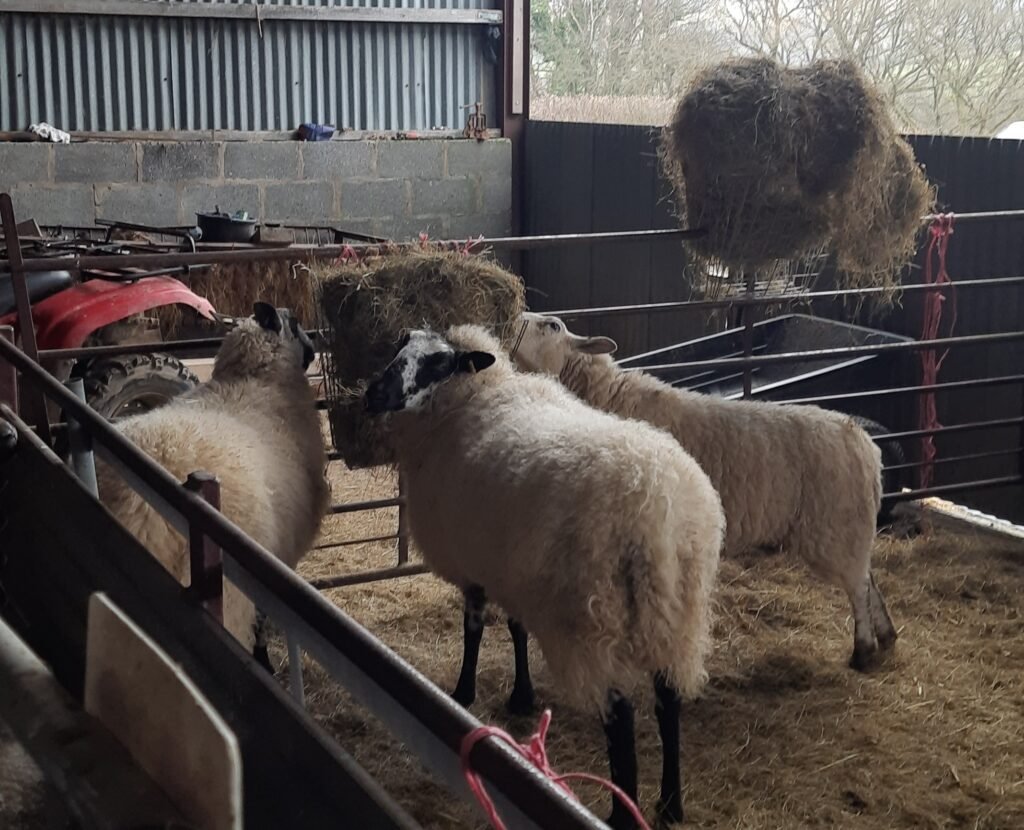
Last year we were struck by horribly persistent foot rot and CODD (contagious ovine digital dermatitis), and spent months battling it before finally making it clear late spring. We’ve been farming sheep since 2021, and up until winter of 2023-2024 had had very few (if any) foot problems, so it caught us a bit off guard. The wet mild weather wasn’t on our side, and we caught it too late to stop spread early on. We don’t let limping sheep stay in the fields, and have a small enough flock (and big enough barn) that we were able to bring everyone afflicted in until they were better to go out – but this did mean that at one point around a fifth of our sheep were inside, all in individual pens. Managing that many in the barn was hard work. This year, we’ve taken a different approach – and so far (touch wood!) it has been going in our favour*.
Foot rot and CODD are diseases that can be caught by sheep, causing infection in the hooves and the bands – where hoof meets ankle. Symptoms can include pain, pus, blood loss, and in CODD separation of the hoof, all manifesting as various degrees of visible tenderness, limping, and lameness1. Caused by bacteria, they can be highly contagious and spread well on wet ground. Though these bacteria are not thought to last long on empty pasture, they can live for a long time on the interdigital skin of sheep who are not showing symptoms, particularly when conditions are wet2.
Last year, we addressed the outbreak through isolation of infected animals, treatment with alamycin spray and antibiotics when needed, and regular foot bathing of everyone else (in either golden hoof or antibacterial soap). Whilst this regime should have worked, by the time we realised we were dealing with CODD it had already spread rapidly. Wet and mild conditions made things all the more difficult. In the end, we had some sheep inside for over a month whilst they recovered.
So this year we’ve done things differently, and gone with prevention over cure. This has so far (touch wood, again!) been more successful, with only a handful of very minor potential infections. These infections have been so mild that they have only amounted in small amounts of tenderness when standing, and that ‘infected hoof’ smell when sniffed up close that became all too familiar last year**. No visible pus, no blood, and no separation. Our protocol has been:
-
- Foot bathing everyone in Golden Hoof from the start of winter. We’re lucky enough to have a footbath built into our barn, and have been rotating the different groups of sheep through it – aiming for around monthly. The Golden Hoof should help to promote healthy growth and kill the bacteria that cause footrot if there is any present.
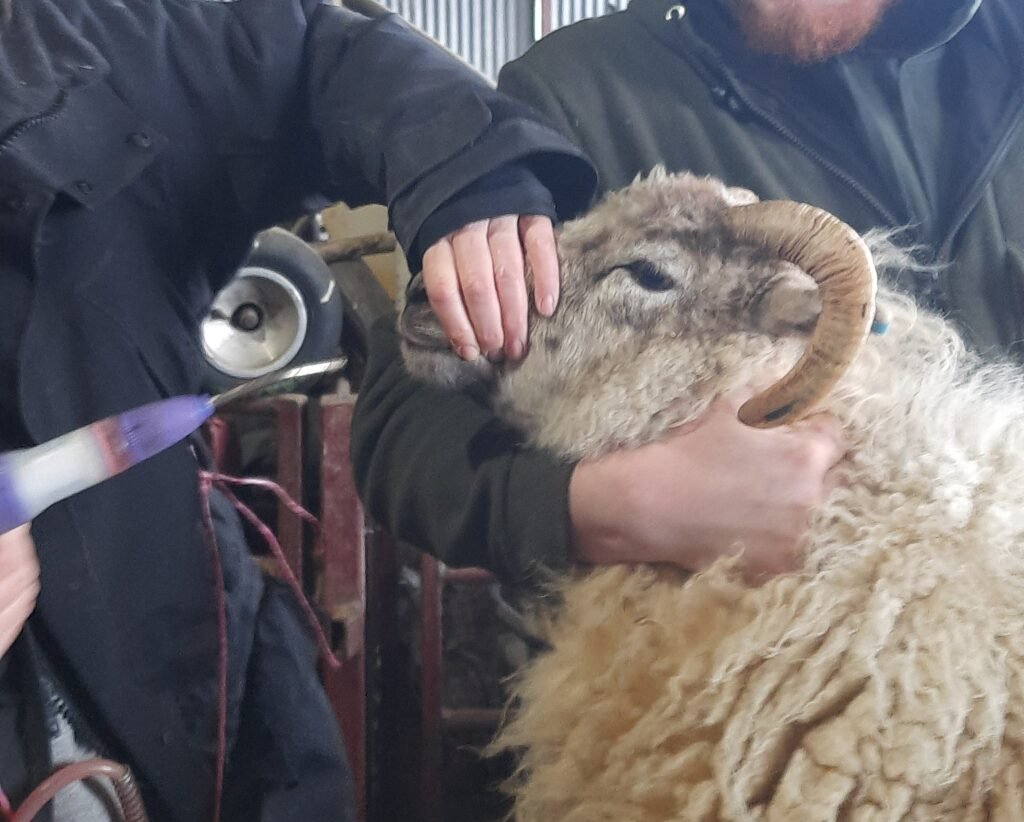
- Osmonds Zinc, Cobalt, Selenium, and B12 drench given every couple of months. Zinc3, cobalt, B124, and selenium5 have all been shown to be essential for immune system function in sheep. Our hope is that by keeping the sheep up to date with these we will be avoiding any deficiencies, boosting foot health, and boosting their immune systems to fight off any footrot or CODD infections that do occur. Unfortunately the sheep aren’t too keen on the taste…
- Isolating and treating early when problems do occur, to avoid the spread of bacteria on pasture. Though this was how we tried to do it last year, the sheep were not always keen to play ball – with a memorable day trying to round up Boreray ending with one sheep jumping the river and spending 24 hours in the woods… Mum has been working hard this year with the Boreray (a breed only domesticated in 19716 and famously flighty), who now come into the barn every day for food – making catching any with limps much easier.
- No sheep travelling on or off the farm (where possible). This means none of our sheep have stepped foot on the land (or the yard, or barn) of another farm, and no new sheep have been bought onto ours without a period of quarantine when they arrive. By doing this, we have hoped to avoid bringing any bacteria onto the farm from elsewhere.